Service Details
Screen Aircraft Maintenance Candidates Like an Engineering Manager, Even If You've Never Worked on an Aircraft
A practical regulatory awareness programme for non-technical HR, recruitment and admissions teams. Learn to tell a candidate who looks qualified on paper from one who actually fits the role, before the CV ever reaches Engineering.

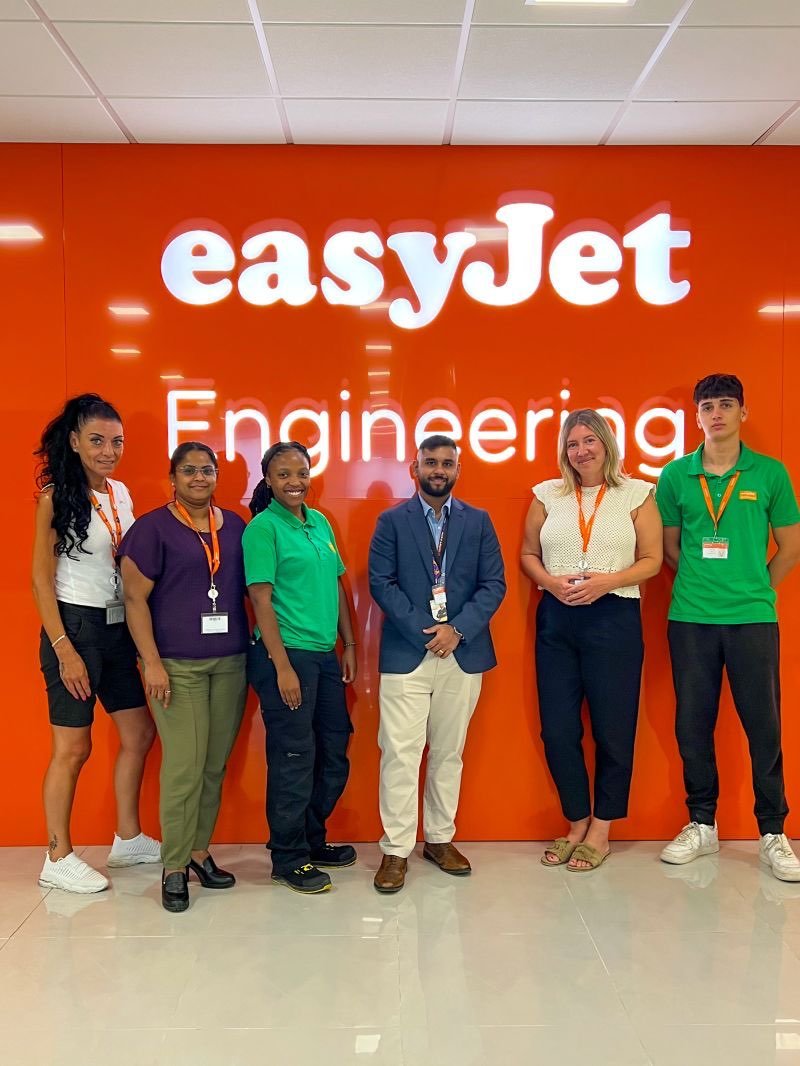
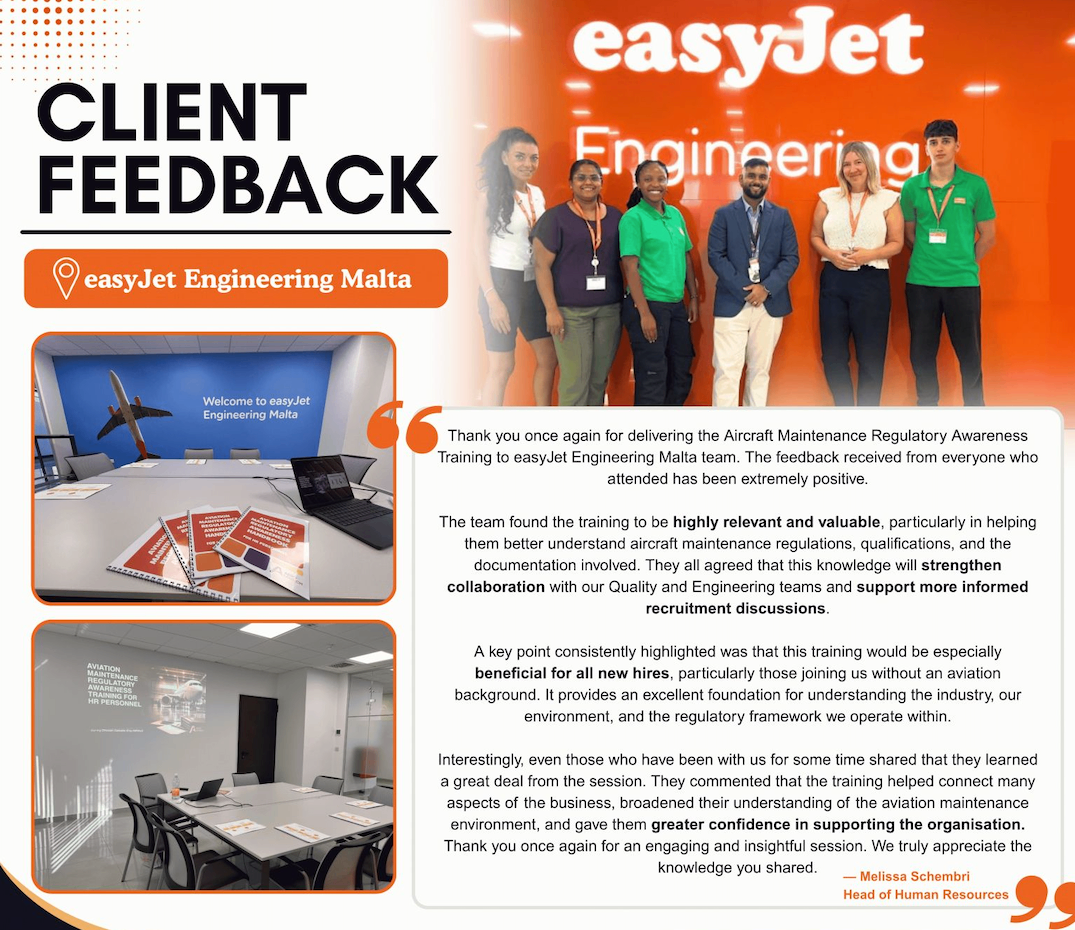
"The team found the training to be highly relevant and valuable, particularly in helping them better understand aircraft maintenance regulations, qualifications, and the documentation involved."
Melissa Schembri, Head of Human Resources, easyJet Engineering Malta
Can your recruitment team answer these 3 questions?
- What's the difference between a blank Part-66 licence holder and an authorised certifying engineer?
- Is that logbook basic experience, or aircraft-specific On-the-Job Training?
- Is that certificate EASA approved, and is it for basic training or type training?
If the honest answer is "not sure", your team is not alone. These rules are rarely explained to HR in plain English. This programme fixes that.
Europe is short of maintenance staff. Every hiring mistake now costs more.
In 2024 the European Labour Authority reported aircraft engine mechanics and repairers as a shortage occupation in 10 countries, including Germany, Austria, Belgium and Malta. EASA's European Plan for Aviation Safety 2026 also highlights the loss of experienced aviation knowledge, reduced time for training, and the challenge of keeping personnel competent.
The candidate pool is small, and every candidate counts. When HR can't read a licence, a logbook or a training certificate, two things happen:
- Unsuitable candidates get sent through, and engineering managers lose hours rejecting them.
- Good candidates get turned away because a fixable gap looked like a dead end.
Your HR team is the front door of your maintenance workforce. This programme gives them the knowledge to open it to the right people.
7 Alarming Mistakes HR Teams Make When Hiring Aircraft Maintenance Staff (#1 Looks Perfect on Paper)
#1: "They hold a licence, so they're a licensed engineer."
Not necessarily. A Part-66 licence without a type rating is often called a "blank" licence. And EASA's own guidance (AMC 145.A.35(a)) states that holding a licence with the right type rating does not automatically qualify someone to certify work. The maintenance organisation must still assess and authorise them. You'll learn to spot all three stages.
#2: "This certificate looks official, so it must be EASA approved."
Some certificates look the part and aren't. You'll practise checking real examples and learn the difference between basic training and type training certificates.
#3: "Their logbook shows their OJT."
A logbook records basic experience. OJT is something different that happens later. It's one of the most common mix-ups on a CV, and once you know it, you'll spot it instantly.
#4: "B1, B2, what's the difference?"
One works mainly on mechanical systems, the other on avionics. Get it wrong on a job advert and you attract the wrong people.
#5: "Their experience is from outside Europe, so it doesn't count."
It might count. Experience gained outside the EASA system can be recognised, subject to assessment by the competent authority. You'll learn which candidates deserve a closer look rather than an automatic no.
#6: "They've done type training, so they can sign for the aircraft."
Type training comes in three levels. Only one leads to a type rating. You'll know which one your role actually needs.
#7: "They were qualified three years ago, so they're qualified now."
Certifying and support staff need recent experience and continuation training to stay current. You'll learn which records to ask for before an offer goes out.
What your organisation gains
- Better shortlists: recruiters match each candidate to the right role (mechanic, licensed technician or authorised certifying engineer) before referring them to Engineering.
- Less back and forth: missing documents and qualification gaps are spotted early, not at technical interview.
- Stronger HR, Engineering and Quality teamwork: everyone speaks the same language.
- Faster onboarding: new HR staff joining from outside aviation understand your technical environment from day one.
- Confident recruiters: they ask the right questions at interview and know when to call in a technical specialist.
What's covered
- Regulations, made simple: ICAO, EASA, Part-145, Part-147 and Part-66, explained for non-engineers
- Licensing pathways: A, B1 and B2 categories, basic experience, examinations and licences
- Document checks: Certificates of Recognition, logbooks, type training and experience records
- Who can do what: type ratings, OJT, certification authorisation, recency and continuation training
- Real practice: knowledge checks and candidate-screening case studies throughout
Who it's for
- HR and talent acquisition teams at EASA Part-145 maintenance organisations
- Airline engineering HR departments
- Aviation recruitment agencies and consultants
- Admissions and recruitment staff at Part-147 training organisations
- Training coordinators and HR staff who manage competence records
- Non-technical managers involved in maintenance recruitment
No technical background needed. If you can read a CV, you can do this course.
"A key point consistently highlighted was that this training would be especially beneficial for all new hires, particularly those joining us without an aviation background."
"Interestingly, even those who have been with us for some time shared that they learned a great deal from the session."
Melissa Schembri, Head of Human Resources, easyJet Engineering Malta
Why I built this programme
I'm Eur Ing Dinuwan Galwatta IEng AMRAeS, an aeronautical engineer with aircraft maintenance and continuing airworthiness experience, and the founder of Aero Launch.
I kept watching capable HR teams get stuck on the same few rules. They aren't hard rules. They're just never explained in plain English. So I built the course I wish every maintenance HR team had from day one.
What this programme is, and what it isn't
This is regulatory awareness training for recruitment. It doesn't turn HR staff into engineers. It gives them the knowledge to screen properly, so Engineering only spends time on candidates worth their time.
It does not replace formal technical competence assessments, Part-147 approved training or Part-145 certification authorisation processes.
Your engineers understand aircraft maintenance. Does your HR team understand the people they're recruiting?
Email me with a few lines about your team and your hiring challenges. I'll come back to you personally with how the programme fits your organisation.
© Aero Launch 2026 | Designed & Developed by TINO DigitalPro